The Phlebotomy Career Guide for Beginners
From blood draws to career growth — here's what the job really looks like
If you've ever had blood drawn at a doctor's office, urgent care, or hospital, you've already met a phlebotomist — you just might not have known it. That calm, skilled person who made the whole thing quick and nearly painless? That's the job.
Phlebotomy is one of the most in-demand entry-level healthcare careers, and it's one that most people don't know much about until they're considering it. Here's a clear look at what phlebotomists actually do, where they work, and how to get started.
The Core Job: Drawing Blood
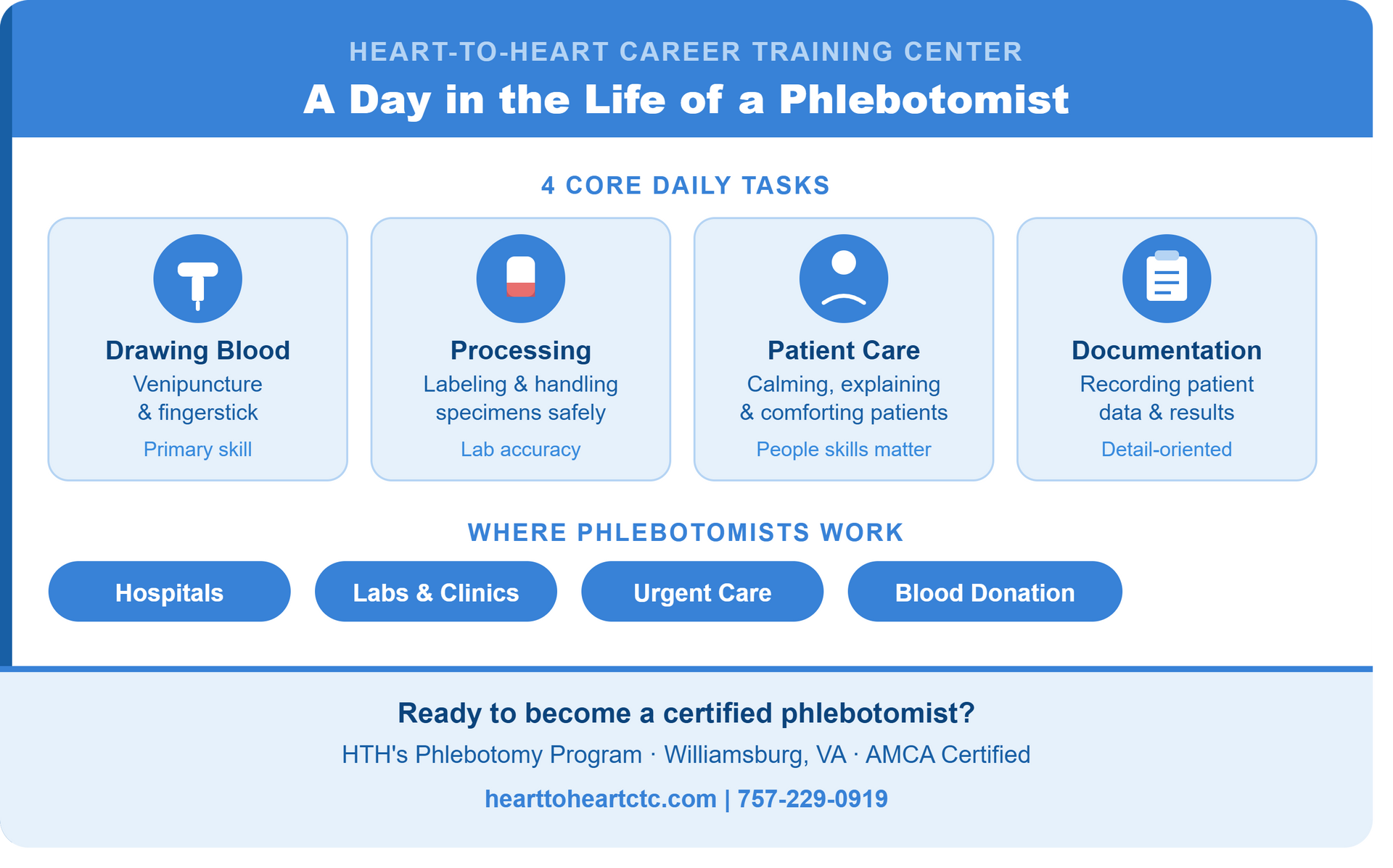
A phlebotomist's primary responsibility is collecting blood specimens from patients. Day-to-day tasks include venipuncture (drawing blood from a vein), capillary puncture (fingerstick/heelstick), specimen processing, and patient interaction.
Where Phlebotomists Work
Phlebotomists work in hospitals, clinical labs, urgent care centers, blood donation centers, physician offices, and mobile health clinics.
Why Phlebotomy Is a Smart Career Move
- Fast training: complete a program in weeks, not years
- Immediate employment: certified phlebotomists are actively hired across Virginia
- Career stepping stone: many go on to become medical assistants, nurses, or lab techs
- Certification recognized statewide (AMCA PTC)
How to Become a Phlebotomist in Virginia
HTH's Phlebotomy Program in Williamsburg is a hybrid course — online coursework plus hands-on lab days. You'll log the skills sessions and draw counts needed to sit for the AMCA Phlebotomy Technician Certification exam.
Ready to get started? HTH's next Phlebotomy class starts June 22 in Williamsburg, Virginia. Visit hearttoheartctc.com or call 757-229-0919.